

Osteoarthritis of the Hip, Knee & Shoulder: Symptoms & Treatment
Dr. Charles Chu Santos | September 24, 2026
Related Services
Key Takeaways
- Osteoarthritis is the most common cause of chronic joint pain in the hip, knee, and shoulder.
- Symptoms often develop gradually and worsen over time without treatment.
- Many patients manage osteoarthritis for years with non-surgical care.
- Joint Replacement Surgery is considered only when conservative treatment no longer provides relief.
- Early diagnosis helps preserve joint function for longer.
Introduction
Osteoarthritis is one of the most common joint conditions affecting adults, and it can develop in the hip, knee, or shoulder – sometimes in more than one joint at once. It happens when the cartilage that cushions a joint gradually wears down, leading to pain, stiffness, and reduced mobility over time.
While osteoarthritis is a normal part of aging for many people, that doesn’t mean the pain has to be accepted as unavoidable. An orthopedic doctor specializes in diagnosing and treating conditions affecting the bones, joints, ligaments, tendons, and muscles. For patients with advanced osteoarthritis that no longer responds to conservative treatment, Joint Replacement Surgery may be considered.
Understanding Osteoarthritis
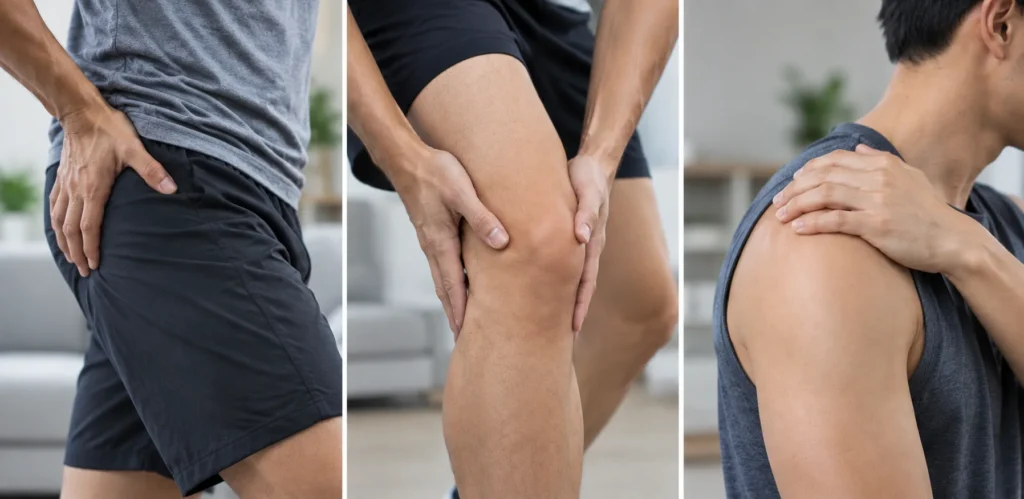
Osteoarthritis is a degenerative joint condition. Cartilage gradually breaks down, causing bones to rub together, leading to pain, inflammation, stiffness, and joint shape changes over time. It most commonly affects the hip, knee, and shoulder, though each presents a little differently:
In the hip
Often causes pain in the groin, outer hip, or thigh, with stiffness after sitting or sleeping.
In the knee
One of the most common forms, causing pain with movement, swelling, and a grinding sensation, often worse with standing or stairs.
In the shoulder
Less common, but can significantly limit range of motion, causing deep aching pain and difficulty with overhead movement.
Common Causes and Risk Factors
- Age-Related Wear — Cartilage naturally thins over time, making osteoarthritis more common with age.
- Previous Joint Injury — A prior injury to the hip, knee, or shoulder can increase the risk of developing osteoarthritis in that joint later on.
- Repetitive Strain — Jobs or activities involving repetitive movement or heavy loading can accelerate joint wear.
- Excess Body Weight — Extra weight places additional stress on weight-bearing joints like the hip and knee.
- Genetics — A family history of osteoarthritis can increase individual risk.
Symptoms of Osteoarthritis
While each joint has its own patterns, osteoarthritis symptoms generally include:
- Pain that worsens with activity and improves with rest
- Stiffness, especially in the morning or after periods of inactivity
- Swelling around the joint
- A grinding, clicking, or catching sensation
- Reduced range of motion over time
- Visible changes in joint shape in more advanced cases
How Osteoarthritis is Diagnosed?
An accurate diagnosis rules out other causes of joint pain and confirms how advanced the osteoarthritis is, which guides the right treatment plan.
Clinical Evaluation
Your orthopedic specialist will examine the affected joint directly — checking range of motion, tenderness at specific points, joint stability, and any visible swelling or deformity. You may be asked to walk, squat, or move the joint through specific positions so the doctor can observe how it behaves under load, not just at rest.
Medical History
The doctor will ask about when the pain started, what makes it better or worse, previous injuries or surgeries to that joint, your activity level and occupation, and whether joint problems run in your family. This history often points toward osteoarthritis versus another condition before any imaging is even done.
Imaging Tests
X-rays are the standard first step. They can’t show cartilage directly, but they reveal its effects: narrowing of the joint space (a sign cartilage has thinned), bone spurs (osteophytes) that form at the joint edges, and changes in bone density near the joint. Your doctor will look at how much space remains between the bones to judge how advanced the wear is.
An MRI is used in select cases — for example, if there’s suspicion of a soft-tissue injury alongside the arthritis, or if X-ray findings don’t fully explain your symptoms. It shows cartilage, ligaments, and other soft tissue in more detail than an X-ray can.
Ruling Out Other Conditions
Because joint pain has many possible causes, your doctor may also consider whether symptoms fit a different pattern — for instance, rheumatoid arthritis, which is autoimmune rather than wear-related, and is managed very differently. Blood tests are sometimes used to help distinguish between the two when the picture isn’t clear from the exam and imaging alone.
Treatment Options for Osteoarthritis
Non-Surgical Treatments — Activity modification, physical therapy, anti-inflammatory medication, and assistive devices can help manage symptoms for many patients.
Lifestyle Modifications — Weight management, low-impact exercise, and strengthening the muscles around the joint can reduce strain and slow symptom progression.
Injection Therapies — In selected cases, corticosteroid injections may help reduce pain and inflammation.
Surgical Treatment — When conservative treatments no longer provide adequate relief, patients may benefit from specialized Shoulder, Hip and Knee Surgery procedures. Joint Replacement Surgery is generally considered when pain significantly limits daily life, non-surgical treatment no longer helps, and imaging shows advanced joint damage. The decision is individualized.
Recovery Expectations
Non-Surgical Recovery
Many patients manage symptoms for years through physical therapy, activity modification, and lifestyle changes, without ever needing surgery.
Surgical Recovery
When joint replacement is needed, recovery is gradual — early assisted walking, structured physical therapy, and a return to light activities over 6 to 12 weeks, with continued improvement over several months.
Importance of Rehabilitation
Physical therapy plays a critical role in restoring strength, flexibility, and joint stability, whether or not surgery is involved.
Long-Term Joint Health
Maintaining joint health over time may include regular low-impact exercise, weight management, and ongoing strengthening programs.
When Should You See An Orthopedic Doctor?
It’s advisable to seek medical evaluation if you experience:
- Joint Pain Lasting More Than a Few Weeks
Persistent pain that doesn’t improve with rest may indicate a condition requiring treatment.
- Pain That Limits Daily Activities
Difficulty walking, climbing stairs, or reaching overhead that affects your routine. - Visible Swelling or Joint Changes
Swelling, warmth, or a change in joint shape should be evaluated. - Stiffness That Doesn’t Ease Up
Morning stiffness lasting longer than 30 minutes, or stiffness that worsens over time.
Early diagnosis often leads to more treatment options and better long-term outcomes.
Frequently Asked Questions
The underlying process — cartilage breakdown — is the same, but symptoms and treatment priorities can differ depending on the joint and how it's used.
No, but its progression can often be slowed, and symptoms managed, with the right treatment plan.
Not necessarily. Many patients manage osteoarthritis for years with non-surgical care. Surgery is considered only when conservative treatment no longer helps.
Yes, in most cases. Low-impact exercise and physical therapy are often recommended to maintain strength and joint function, guided by your specialist.
Osteoarthritis is caused by mechanical wear on the joint over time, while rheumatoid arthritis is an autoimmune condition that causes joint inflammation. They're diagnosed and treated differently, which is why an accurate evaluation matters.

Dr. Chu Santos' Advice
“Osteoarthritis doesn’t have to mean giving up the activities you enjoy. The earlier we identify it and start the right treatment plan, the more options we have to keep you moving comfortably – whether that’s through therapy, lifestyle changes, or, when appropriate, surgery.“
– Dr. Charles Andrew Chu Santos MD, FPOA
From non-surgical care to joint replacement, Dr. Chu Santos specializes in Sports Medicine and Arthroscopic Surgery, Shoulder, Hip and Knee Surgery, and Joint Replacement Surgery.
Related Services
In This Article
Need Help with Joint Pain?
Dr. Charles Andrew Chu Santos MD, FPOA
Need an appointment or have questions? Get in touch with Dr. Charles Andrew Chu Santos and visit the clinic during operating hours. Your orthopedic health is our priority.
Clinic Hours
Tuesday & Friday
9am – 4pm
Thursday & Saturday
9am – 1pm