

How to Choose an Orthopedic Doctor in Cebu: 7 Things to Check Before You Book
Dr. Charles Chu Santos MD, FPOA | October 06, 2026
Related Services
Key Takeaways
- Choose a doctor whose training matches your condition, not just the nearest clinic.
- A good orthopedic doctor explains both non-surgical and surgical options.
- Surgery is not always the answer. Many conditions improve with conservative care.
- Check location, schedule, and insurance coverage before you book.
- Prepare your questions and bring your records to get the most from the first visit.
Introduction
Joint pain or a sports injury can make everyday life harder, and deciding who to see is often the first difficult step. In Cebu there are many orthopedic doctors and clinics, and it is not always clear how to compare them.
The right doctor is not simply the one closest to home or the one with the longest list of procedures. It is the doctor whose training fits your condition, who explains your options clearly, and whom you can reach when you need follow-up care.
An orthopedic doctor specializes in diagnosing and treating conditions affecting the bones, joints, ligaments, tendons, and muscles. This guide covers seven things to check before you book, and the questions to ask at your first visit. For patients who need specialized care, services such as Sports Medicine and Arthroscopic Surgery, Shoulder, Hip and Knee Surgery, and Joint Replacement Surgery may be considered.
What does an Orthopedic Doctor Treat?
Orthopedic doctors treat problems of the musculoskeletal system. Common reasons to see one include:
- Joint pain in the knee, hip, or shoulder
- Sports injuries such as ligament, meniscus, or rotator cuff tears
- Arthritis and age-related joint wear
- Fractures and other bone injuries
- Joint pain that has not improved with rest or medication
Some orthopedic doctors focus on a specific area, called a subspecialty. Choosing one whose focus matches your problem can make a real difference.
7 Things to Check Before You Book
Use this checklist to compare doctors and clinics.
1. Training That Matches Your Condition
Orthopedics is a broad field, and many doctors build additional expertise through fellowship training in a specific area. If you have a knee, hip, or shoulder problem or a sports injury, look for a doctor with training in that area.
For example, Dr. Chu Santos completed fellowship training in arthroscopic surgery, sports medicine, and shoulder arthroplasty at Thammasat University in Thailand, and in hip and knee preservation, replacement, and revision surgery at Brisbane Private Hospital in Australia.
What to look for:
- A listed fellowship or subspecialty
- Training that matches your joint or condition
- Training that is stated clearly on the doctor’s website or profile
2. Both Non-Surgical and Surgical Options
Surgery is only one part of orthopedic care. Many conditions improve with rest, physical therapy, medication, or injections. A good orthopedic doctor discusses these first and recommends surgery only when it is appropriate.
Look for a doctor who offers both, so the recommendation is based on what you need rather than on the only option available.
3. Experience With Your Specific Condition or Procedure
Ask how often the doctor treats your condition or performs your procedure. Experience with a specific problem, such as ACL injuries, rotator cuff tears, or joint replacement, helps the doctor anticipate challenges and plan your recovery.
4. Where Procedures Are Performed
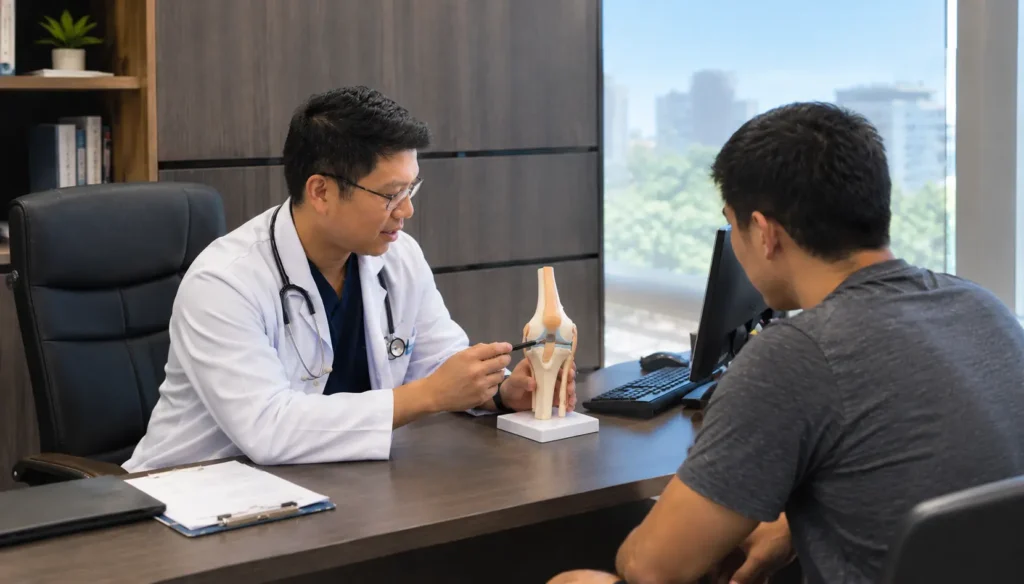
If surgery may be needed, find out which hospitals the doctor works with and whether they are convenient for you and your family. Hospital affiliations also tell you about the setting where your procedure and recovery will take place.
5. Clear Explanations and Shared Decisions
A good first visit should leave you understanding your situation. Look for a doctor who:
- Explains your diagnosis in plain language
- Shows your imaging results and what they mean
- Lays out your options with their benefits and risks
- Gives you time to ask questions and decide
6. Clinic Access, Schedule, and Insurance
Treatment often involves several visits for follow-up and rehabilitation, so practical details matter. Check:
- The clinic’s location and how easy it is to reach
- The days and hours the doctor sees patients
- How to book, and how soon appointments are available
- Whether your HMO or insurance is accepted
7. Credentials You Can Verify
Look for credentials that can be checked: a valid medical license, specialty training in orthopedics, and membership or fellowship in a professional society. In the Philippines, the letters FPOA after a doctor’s name indicate fellowship in the Philippine Orthopedic Association.
Titles alone are not enough. It is reasonable to ask a doctor about his training and experience.
What “Best Orthopedic Doctor” Really Means
Many people search for the “best” orthopedic doctor, but there is no single best doctor for everyone. The right choice depends on your condition, your goals, and how well you and the doctor communicate. Instead of looking for a ranking, look for:
- Training that fits your problem
- A clear explanation of your options
- Respect for your questions
- A plan that fits your daily life
- Reasonable access to follow-up care
Online reviews and word of mouth can help. Read them for patterns, such as clear communication and good follow-up care, rather than relying on star ratings alone.
Orthopedic Surgeon or Sports Medicine Doctor: Which Do You Need?
The two overlap, and the right choice depends on your situation.
Orthopedic Surgeon
Treats a wide range of bone, joint, ligament, and tendon problems, with both non-surgical and surgical options. A good fit for arthritis, fractures, joint pain, and injuries that may need surgery.
Sports Medicine Doctor
Focuses on injuries from sports and physical activity, from sprains and tendon problems to ligament and cartilage tears. Some sports medicine specialists are orthopedic surgeons who can also treat injuries surgically, using minimally invasive arthroscopic techniques.
If you are unsure, an orthopedic doctor who also has sports medicine training, as Dr. Chu Santos does, can evaluate the problem and guide you to the right treatment, whether that is rehabilitation or surgery.
Finding an Orthopedic Clinic in Cebu City
Practical details matter, especially if you will need several visits.
- Location: Cebu Orthopaedic Institute, Room 401, 4th Floor, Robinsons Cybergate, Fuente, Cebu City
- Clinic days: Tuesday and Friday, 9am to 4pm. Thursday and Saturday, 9am to 1pm.
- Booking: use the Book Appointment button, call +63 9497547549, or email cebu.shoulder.hipandknee@gmail.com
- Insurance: Dr. Chu Santos works with many HMOs and insurers. Confirm your coverage with the clinic before your visit.
Questions to Ask at Your First Visit
Come prepared. These questions help you understand your care:
- What is my diagnosis, and how certain is it?
- What are my treatment options, including non-surgical ones?
- What are the benefits and risks of each?
- If surgery is recommended, why now, and what happens if I wait?
- What will recovery involve, and how long will it take?
- How often will I need follow-up visits?
- What will treatment cost, and what does my insurance cover?
What to Bring
- Previous X-rays, MRI results, and medical reports
- A list of your medications and allergies
- Your insurance or HMO card and a valid ID
- Notes on when the pain started and what makes it better or worse
Signs a Doctor May Not Be the Right Fit
- Guarantees a specific result
- Pushes you to decide on surgery quickly without discussing alternatives
- Does not explain your diagnosis or answer your questions
- Discourages a second opinion
You are always free to seek a second opinion.
When Should You See an Orthopedic Doctor?
It is advisable to seek medical evaluation if you experience:
- Joint Pain Lasting More Than 1 to 2 Weeks.
Persistent pain that does not improve with rest may indicate a condition requiring treatment.
- Pain That Limits Daily Activities.
Difficulty walking, climbing stairs, or reaching overhead that affects your routine.
- Swelling, Locking, or Instability.
A joint that swells, catches, or gives way may indicate a ligament or cartilage injury.
- Sudden Loss of Movement or Inability to Bear Weight After an Injury.
This should be evaluated promptly
Early diagnosis often leads to more treatment options and better long-term outcomes.
Frequently Asked Questions
It depends on your HMO or insurer. Some require a referral or approval before a specialist visit, while others do not. Check with your provider before booking.
Orthopedic surgeons treat a wide range of bone and joint conditions, with surgical and non-surgical options. Sports medicine doctors focus on injuries from activity and sport. Some doctors, like Dr. Chu Santos, are trained in both.
For mild, short-term aches, a physical therapist may help. For pain that lasts more than 1 to 2 weeks, follows an injury, or comes with swelling, locking, or instability, an orthopedic evaluation first helps identify the cause and the safest treatment plan.
Most patients start with non-surgical treatment. Surgery is typically considered when conservative care does not provide enough relief or when imaging shows significant structural damage. Your doctor can explain whether surgery is appropriate for you.
Bring previous imaging and reports, a list of your medications and allergies, your insurance or HMO card, and notes on when your symptoms started.
Dr. Chu Santos' Advice
“Choosing an orthopedic doctor should not feel rushed. Look for someone who explains your diagnosis clearly, talks through all your options, and recommends surgery only when it is truly needed. If you have questions, ask them. A good plan is one you understand and feel comfortable with.“
– Dr. Charles Andrew Chu Santos MD, FPOA
Need Help Choosing an Orthopedic Doctor?
Related Orthopedic Services
You may also find our guide on When Should You See an Orthopedic Doctor for Knee Pain? helpful if you are experiencing ongoing knee discomfort or instability.
In This Article
- Introduction
- What Does an Orthopedic Doctor Treat?
- 7 Things to Check Before You Book
- What “Best Orthopedic Doctor” Really Means
- Orthopedic Surgeon or Sports Medicine Doctor: Which Do You Need?
- Finding an Orthopedic Clinic in Cebu City
- Questions to Ask at Your First Visit
- When Should You See an Orthopedic Doctor?
- Frequently Asked Questions
- Dr. Chu Santos’ Advice
Need Help Choosing an Orthopedic Doctor?
Dr. Charles Andrew Chu Santos MD, FPOA
Need an appointment or have questions? Get in touch with Dr. Charles Andrew Chu Santos and visit the clinic during operating hours. Your orthopedic health is our priority.
Clinic Hours
Tuesday & Friday
9am – 4pm
Thursday & Saturday
9am – 1pm