

Joint Replacement Surgery in Cebu
Related Services
Restore Your Mobility. Get Back to Living.
Severe joint damage can make everyday movement increasingly difficult. Walking, climbing stairs, standing, getting out of a chair, or performing simple daily activities may become painful and challenging when a joint is significantly damaged.
When joint damage causes persistent pain and limits your quality of life, joint replacement surgery may be considered.
At Dr. Chu Santos Orthopedic Care, joint replacement surgery is available for selected conditions affecting the knee, hip, and shoulder. The goal of treatment is to relieve pain, improve joint function, and help patients regain greater mobility and independence.
Dr. Charles Andrew Chu Santos provides individualized orthopedic evaluation and surgical care to help patients understand their condition and explore whether joint replacement may be an appropriate treatment option.
If severe joint pain is limiting your mobility and affecting your quality of life, an orthopedic evaluation can help you understand your options.
What Is Joint Replacement Surgery?
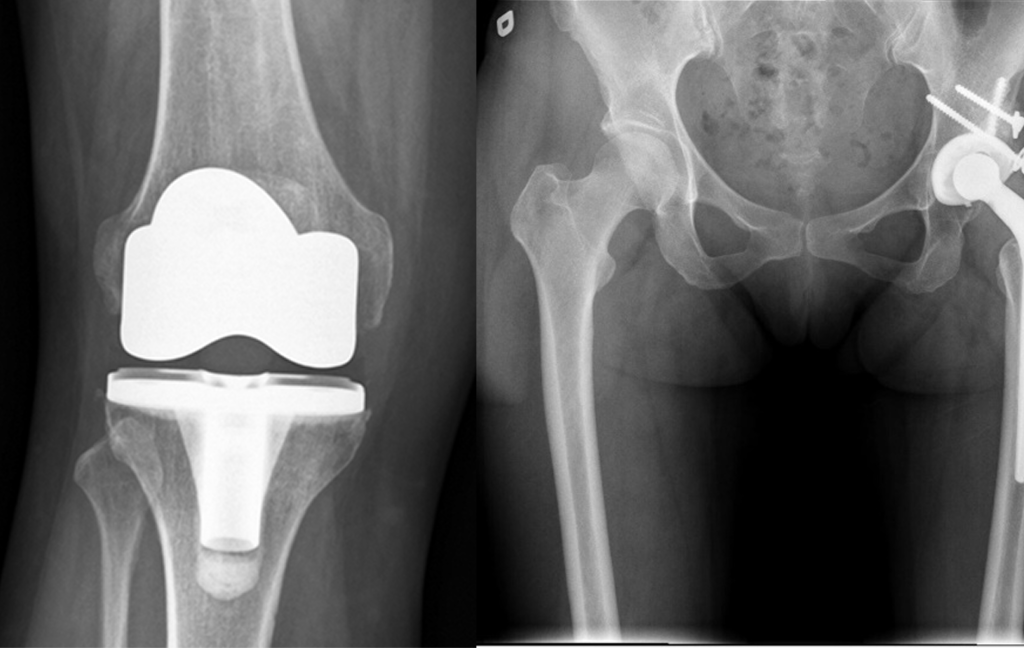
Joint replacement surgery is a procedure that removes damaged portions of a joint and replaces them with artificial components designed to help restore joint function.
Joints can become severely damaged because of conditions such as:
- Osteoarthritis
- Rheumatoid arthritis
- Severe joint injury
- Fractures
- Cartilage damage
- Other conditions that cause significant joint deterioration
When damage becomes severe, patients may experience ongoing pain, stiffness, reduced movement, and difficulty performing everyday activities.
Joint replacement surgery may be considered when joint damage significantly affects a patient’s quality of life and other treatment options have not provided sufficient improvement.
Total Knee Replacement
The knee is one of the body’s major weight-bearing joints. Damage to the knee can significantly affect walking, standing, exercising, and other daily activities.
Total knee replacement may be considered for patients with severe damage affecting the knee joint.
Common Symptoms of Severe Knee Joint Damage
Symptoms may include:
- Persistent knee pain
- Pain during walking or standing
- Difficulty climbing stairs
- Knee stiffness
- Reduced range of motion
- Swelling
- Difficulty getting up from a chair
- Pain that affects sleep
- Difficulty performing daily activities
The severity and cause of the knee damage must be evaluated before determining whether knee replacement surgery may be appropriate.
What Happens During Total Knee Replacement?
During total knee replacement surgery, damaged portions of the knee joint are removed and replaced with artificial components.
The purpose of the procedure is to help:
- Relieve pain
- Improve joint function
- Support better movement
- Improve the ability to perform daily activities
The specific surgical approach and replacement components depend on the patient’s condition and individual circumstances.
Recovery and rehabilitation are important parts of the treatment process.
Total Hip Replacement
The hip is a major weight-bearing joint that supports walking, standing, and many other movements.
Severe hip damage may cause persistent pain and increasingly limit mobility.
Symptoms of Severe Hip Damage
Patients with significant hip problems may experience:
- Hip or groin pain
- Pain that may extend to the thigh
- Difficulty walking
- Hip stiffness
- Reduced movement
- Difficulty putting on shoes or socks
- Difficulty climbing stairs
- Pain that affects sleep
- Difficulty performing everyday activities
A medical evaluation can help determine the underlying cause of hip pain and whether joint replacement may be an appropriate treatment option.
What Happens During Total Hip Replacement?
During total hip replacement surgery, damaged portions of the hip joint are replaced with artificial components.
The goal is to help:
- Relieve pain
- Improve mobility
- Restore joint function
- Support a return to everyday activities
Recovery varies from patient to patient. Rehabilitation and following post-operative instructions are important parts of the recovery process.
Total Shoulder Replacement
The shoulder allows a wide range of movement, including reaching, lifting, and rotating the arm.
Severe damage to the shoulder joint may cause pain, stiffness, and significant limitations in daily activities.
Symptoms of Severe Shoulder Joint Damage
Symptoms may include:
- Persistent shoulder pain
- Difficulty lifting the arm
- Reduced range of motion
- Shoulder stiffness
- Difficulty reaching overhead
- Difficulty dressing or performing personal care
- Pain that affects sleep
- Reduced ability to use the arm normally
The cause and extent of shoulder damage must be evaluated before determining whether shoulder replacement surgery may be appropriate.
What Happens During Total Shoulder Replacement?
During total shoulder replacement surgery, damaged portions of the shoulder joint are replaced with artificial components.
The goal is to help:
- Reduce pain
- Improve shoulder movement
- Restore joint function
- Support greater independence in daily activities
The appropriate surgical approach depends on the specific condition and the structures affected.
When Is Joint Replacement Surgery Considered?
Joint replacement surgery is not automatically the first treatment for joint pain.
It may be considered when:
- Joint damage is severe
- Pain is persistent
- Daily activities are significantly affected
- Movement has become increasingly limited
- Other treatments have not provided sufficient improvement
- The condition has significantly affected quality of life
The decision to consider joint replacement depends on several factors, including the condition of the joint, symptoms, medical history, overall health, and individual goals.
An orthopedic consultation can help determine whether joint replacement may be an appropriate option.
What Happens Before Joint Replacement Surgery?
Before surgery is considered, an orthopedic evaluation is performed to understand your condition.
This may include:
Medical History
Your doctor may ask about:
- Your symptoms
- How long you have experienced pain
- How your symptoms affect daily activities
- Previous injuries
- Previous treatments
- Other medical conditions
Physical Examination
The joint may be evaluated for:
- Pain
- Range of motion
- Strength
- Stability
- Swelling
- Movement limitations
Physical Examination
The joint may be evaluated for:
- Pain
- Range of motion
- Strength
- Stability
- Swelling
- Movement limitations
Diagnostic Imaging
Imaging tests may be recommended to assess the condition of the joint and the extent of damage.
The results of your evaluati
on help guide treatment recommendations.
What Is Recovery Like After Joint Replacement?
Recovery varies depending on:
- The joint treated
- The specific procedure
- The severity of the original condition
- Your overall health
- Your body’s healing process
- Your participation in rehabilitation
Rehabilitation and following post-operative instructions are important parts of recovery.
Your orthopedic care team can provide guidance regarding movement, activity progression, and recovery based on your specific procedure and condition.
A Personalized Approach to Joint Replacement Care
Joint replacement surgery is a major treatment decision, and every patient has different needs.
The decision to proceed with surgery depends on your symptoms, the condition of your joint, your overall health, and how the condition affects your daily life.
At Dr. Chu Santos Orthopedic Care, patients receive an individualized evaluation to help them understand their condition and treatment options.
The goal is to provide precise surgical care focused on helping patients achieve better mobility, improved function, and a better quality of life.
Frequently Asked Questions
Joint replacement surgery may be considered when a joint is severely damaged, pain is persistent, daily activities are significantly affected, and other treatment options have not provided sufficient improvement.
No. Many joint conditions can be treated without joint replacement surgery. The appropriate treatment depends on the cause and severity of the condition.
Common joint replacement procedures include total knee replacement, total hip replacement, and total shoulder replacement.
Persistent knee pain, severe joint damage, stiffness, and difficulty performing daily activities may be signs that an orthopedic evaluation is needed. Only a proper medical evaluation can determine whether knee replacement may be appropriate.
Hip replacement may be considered when severe hip damage causes persistent pain and significantly affects walking, movement, sleep, or daily activities.
The duration of surgery varies depending on the joint being treated, the surgical approach, and individual patient factors. Your orthopedic surgeon can provide more specific information during your consultation.
Recovery varies depending on the type of joint replacement, the patient's overall health, the specific procedure, and rehabilitation. Your recovery timeline will be discussed as part of your treatment plan.
Rehabilitation is commonly an important part of recovery after joint replacement surgery. The specific rehabilitation plan depends on the procedure and individual patient needs.
Many patients are able to return to various daily activities after recovery. The timing and level of activity depend on the type of surgery, recovery progress, and individual medical guidance.
Your consultation may include a discussion of your symptoms and medical history, a physical examination, and diagnostic imaging when appropriate. Your orthopedic surgeon can then discuss your condition and potential treatment options.
Take the Next Step Toward Better Mobility
Severe joint pain should not have to define your daily life.
If persistent pain, stiffness, or joint damage is affecting your ability to walk, move, work, or enjoy everyday activities, a proper orthopedic evaluation can help you understand your treatment options.
If you are looking for a joint replacement surgeon in Cebu or are considering knee, hip, or shoulder replacement surgery, Dr. Chu Santos Orthopedic Care can help evaluate your condition and discuss the next steps.
Schedule an appointment with Dr. Charles Andrew Chu Santos to explore your options for improved mobility and joint function.
Related Services
In This Article
- Introduction
- What Is Joint Replacement Surgery?
- Total Knee Replacement
- Total Hip Replacement
- Total Shoulder Replacement
- When is Joint Replacement Surgery Considered?
- What happens before Joint Replacement Surgery?
- What is Recovery Like After Joint Replacement?
- Frequently Asked Questions
- Get Expert Evaluation for Your Sports Injury
Restore your mobility. Reclaim your quality of life.
Dr. Charles Andrew Chu Santos MD, FPOA
Need an appointment or have questions? Get in touch with Dr. Charles Andrew Chu Santos and visit the clinic during operating hours. Your orthopedic health is our priority.
Clinic Hours
Tuesday & Friday
9am – 4pm
Thursday & Saturday
9am – 1pm