

Shoulder, Hip and Knee Surgery in Cebu
Related Services
Expert Orthopedic Care for Shoulder, Hip, and Knee Conditions
Pain in your shoulder, hip, or knee can affect nearly every part of your daily life. Simple activities such as walking, climbing stairs, reaching overhead, exercising, or getting out of a chair may become difficult when a joint is injured or affected by a long-term condition.
At Dr. Chu Santos Orthopedic Care, orthopedic evaluation and surgical treatment are available for a range of conditions affecting the shoulder, hip, and knee.
Whether your pain is caused by an injury, instability, cartilage damage, or another orthopedic condition, the appropriate treatment depends on the underlying cause. Some conditions may improve with non-surgical care, while others may require surgical intervention to repair or reconstruct damaged structures.
Dr. Charles Andrew Chu Santos provides individualized orthopedic care focused on helping patients understand their condition, explore appropriate treatment options, and work toward improved strength, stability, movement, and function.
If shoulder, hip, or knee pain is interfering with your daily activities, an orthopedic evaluation can help determine the next step.
When Should You See an Orthopedic Surgeon?
Not all joint pain requires surgery. However, an orthopedic evaluation may be appropriate when pain or other symptoms continue to affect your daily life.
Consider seeking orthopedic care if you experience:
- Persistent shoulder, hip, or knee pain
- Pain that does not improve with rest or other initial treatment
- Difficulty walking or bearing weight
- Reduced range of motion
- Joint stiffness
- Repeated swelling
- A feeling of instability or weakness
- A joint that locks, catches, or gives way
- Pain after an injury
- Difficulty returning to work, exercise, or normal activities
A consultation can help identify the cause of your symptoms and determine whether non-surgical or surgical treatment may be appropriate.
For more information about persistent knee pain and when an orthopedic evaluation may be needed, read When Should You See an Orthopedic Doctor for Knee Pain?
Shoulder Conditions and Surgery
The shoulder is one of the most mobile joints in the body. Its wide range of movement allows us to reach, lift, throw, and perform many daily activities. However, this mobility can also make the shoulder vulnerable to injuries and conditions that affect its muscles, tendons, ligaments, and joint structures.
Rotator Cuff Tears
The rotator cuff is a group of muscles and tendons that helps stabilize the shoulder and control its movement.
A rotator cuff tear may occur because of:
- A sudden injury
- Repetitive overhead activity
- Sports-related stress
- Gradual wear and tear
Common symptoms may include:
- Shoulder pain
- Weakness when lifting the arm
- Difficulty reaching overhead
- Pain that worsens at night
- Reduced shoulder movement
Treatment depends on the severity and cause of the tear. Some patients may benefit from non-surgical treatment, while others may require surgical repair.
Shoulder Instability and Dislocation
Shoulder instability occurs when the joint is unable to remain properly stable during movement. In some cases, the shoulder may partially or completely dislocate.
Symptoms may include:
- A feeling that the shoulder is slipping or giving way
- Repeated dislocations
- Pain
- Weakness
- Limited movement
Treatment depends on factors such as the severity of the injury, whether the problem has occurred repeatedly, and the structures affected.
Shoulder Pain
Shoulder pain can have many possible causes, including injuries, tendon problems, joint conditions, and overuse.
Persistent shoulder pain should not necessarily be dismissed as a normal part of aging or physical activity. If pain continues, affects your movement, or interferes with sleep and daily activities, an orthopedic assessment may help determine the underlying cause.
Hip Conditions and Surgery
The hip is a major weight-bearing joint that helps support walking, standing, running, and other movements.
Hip problems may develop because of injury, overuse, structural problems, cartilage damage, or gradual changes in the joint.
Hip Pain
Hip pain may be felt in different areas, including:
- The front of the hip
- The side of the hip
- The buttocks
- The groin
- The upper thigh
The location and characteristics of the pain may provide important information about its possible cause.
Hip pain may be associated with:
- Injury
- Joint damage
- Cartilage problems
- Tendon or muscle conditions
- Arthritis
- Other orthopedic conditions
An evaluation can help determine the cause of hip pain and identify appropriate treatment options.
When Hip Surgery May Be Considered
Surgery may be considered when a structural problem causes persistent symptoms and significantly affects daily activities, particularly when non-surgical treatments have not provided sufficient improvement.
The appropriate treatment depends on the specific condition, its severity, and the patient’s overall health and goals.
Knee Conditions and Surgery
The knee is one of the body’s major weight-bearing joints and is commonly affected by both sudden injuries and gradual wear.
Knee problems may affect the ligaments, menisci, cartilage, bones, or other structures within and around the joint.
Meniscus Tears
The meniscus is a piece of cartilage that helps cushion and stabilize the knee.
A meniscus tear may occur when the knee twists suddenly or may develop gradually over time.
Symptoms may include:
- Knee pain
- Swelling
- Stiffness
- Clicking or catching
- Difficulty bending or straightening the knee
- A feeling that the knee is locking
Treatment depends on factors such as the type, location, and severity of the tear.
Some patients may improve with non-surgical treatment, while others may require surgery depending on the injury.
ACL Tears
The anterior cruciate ligament, or ACL, is one of the major ligaments responsible for stabilizing the knee.
ACL injuries may occur during:
- Sudden changes in direction
- Pivoting
- Jumping and landing
- Sports-related collisions
- Falls
Symptoms may include a popping sensation, swelling, pain, and a feeling of instability.
Treatment depends on the injury and the patient’s individual circumstances. Patients who are active in sports or who have significant instability may require a more specialized treatment plan.
For more information about ACL injuries, symptoms, and treatment options, visit ACL Injury Symptoms and Treatment Options.
Cartilage Problems
Cartilage helps protect the surfaces of joints and allows smooth movement.
Damage to knee cartilage may occur because of injury, repetitive stress, or gradual wear and tear.
Cartilage problems may cause:
- Pain
- Swelling
- Stiffness
- Catching or locking
- Reduced movement
The appropriate treatment depends on the location and extent of the cartilage damage.
Knee Dislocation
A knee dislocation is a serious injury that occurs when the bones forming the knee joint are forced out of their normal position.
It may result from significant trauma and can affect multiple structures around the knee, including ligaments and other soft tissues.
A suspected knee dislocation requires urgent medical evaluation.
Treatment Options for Shoulder, Hip, and Knee Conditions
Treatment is based on the diagnosis, the severity of the condition, and the patient’s individual needs.
Depending on the condition, treatment may include:
Non-Surgical Treatments
Some joint conditions may initially be managed with:
- Activity modification
- Rest and recovery
- Physical therapy
- Rehabilitation
- Medication when appropriate
- Bracing or other supportive measures
Non-surgical treatment may be appropriate for certain injuries and conditions.
Arthroscopic Surgery
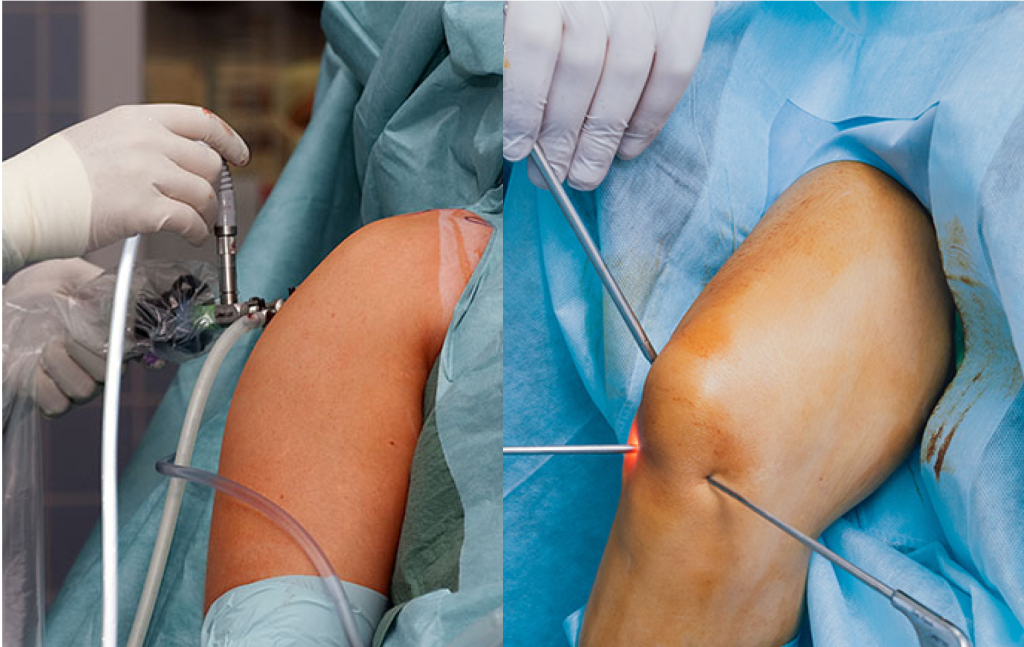
Some shoulder and knee conditions may be treated using arthroscopic techniques.
Arthroscopy uses a small camera and specialized instruments to examine and treat selected problems inside a joint through small incisions.
It may be considered for certain conditions involving structures such as:
- The rotator cuff
- Meniscus
- Cartilage
- Other joint structures
The suitability of arthroscopic surgery depends on the specific diagnosis and the patient’s individual circumstances.
Repair and Reconstructive Surgery
Some injuries require repair or reconstruction of damaged structures to help restore stability and function.
Examples may include selected ligament, tendon, or other soft-tissue injuries.
The appropriate procedure depends on the condition and the structures involved.
What Can You Expect During an Orthopedic Consultation?
An orthopedic consultation typically begins with a discussion about your symptoms and medical history.
You may be asked about:
- When your symptoms began
- Whether an injury occurred
- What activities make your symptoms worse
- How your symptoms affect your daily life
- Previous treatments or injuries
A physical examination may then assess:
- Range of motion
- Strength
- Joint stability
- Tenderness
- Swelling
- Movement patterns
Imaging or other diagnostic tests may be recommended when appropriate.
After evaluation, your treatment options can be discussed based on your condition, goals, and overall health.
A Personalized Approach to Joint Care
The same symptom can have different causes in different patients.
For example, knee pain may be related to a ligament injury, meniscus tear, cartilage damage, arthritis, or another condition. This is why identifying the underlying cause is an important part of treatment planning.
At Dr. Chu Santos Orthopedic Care, treatment recommendations are based on the patient’s specific condition and needs.
The goal is to help patients understand their diagnosis and make informed decisions about their treatment options.
Frequently Asked Questions
Consider an orthopedic evaluation if your pain persists, worsens, limits your movement, affects your ability to walk or use your arm, or interferes with your daily activities.
No. Many orthopedic conditions can be treated without surgery. Surgery may be considered when a structural problem requires repair or reconstruction, or when other treatment options have not provided sufficient improvement.
Rotator cuff tears may cause shoulder pain, weakness, difficulty lifting the arm, and pain during certain movements. A proper evaluation is needed to determine the cause of these symptoms.
Some meniscus tears may improve with non-surgical treatment, depending on the type, location, and severity of the tear. Other tears may require surgical treatment.
Common symptoms may include a popping sensation at the time of injury, swelling, pain, difficulty walking, and a feeling that the knee is unstable.
Hip pain may be caused by injuries, joint problems, cartilage damage, arthritis, tendon or muscle conditions, and other orthopedic issues. The cause cannot always be determined based on symptoms alone.
An orthopedic evaluation may include a discussion of your symptoms, a physical examination, and imaging tests when appropriate. The evaluation helps identify the structures that may be causing your pain.
Recovery varies depending on the type of procedure, the condition being treated, the patient's overall health, and the rehabilitation process. Your orthopedic surgeon can provide more specific guidance based on your individual treatment plan.
A suspected knee dislocation requires urgent medical evaluation. Do not attempt to force the joint back into position yourself.
Take the Next Step Toward Better Joint Function
Persistent shoulder, hip, or knee pain can affect your ability to work, exercise, move comfortably, and enjoy everyday activities.
If you are looking for an orthopedic surgeon in Cebu or need evaluation for a shoulder, hip, or knee condition, Dr. Chu Santos Orthopedic Care can help you understand your condition and explore appropriate treatment options.
Schedule an appointment with Dr. Charles Andrew Chu Santos to have your joint condition evaluated.
Related Services
In This Article
- Introduction
- When Should You See an Orthopedic Surgeon?
- Shoulder Conditions and Surgery
- Hip Conditions and Surgery
- Knee Conditions and Surgery
- Treatment Options for Shoulder, Hip, and Knee Conditions
- What Can You Expect During an Orthopedic Consultation?
- A Personalized Approach to Joint Care
- Frequently Asked Questions
- Take the Next Step Toward Better Joint Function
Better movement starts with the right care.
Dr. Charles Andrew Chu Santos MD, FPOA
Need an appointment or have questions? Get in touch with Dr. Charles Andrew Chu Santos and visit the clinic during operating hours. Your orthopedic health is our priority.
Clinic Hours
Tuesday & Friday
9am – 4pm
Thursday & Saturday
9am – 1pm