

Sports Medicine Doctor in Cebu: What They Treat and When to See One
Dr. Charles Chu Santos MD, FPOA | October 14, 2026
Related Services
Key Takeaways
- You do not have to be an athlete to need a sports medicine doctor. Anyone who is active can get a sports injury.
- Swelling that does not settle, a joint that gives way, or pain that returns every time you play should be checked.
- Many sports injuries improve with non-surgical care, especially when caught early.
- When surgery is needed, minimally invasive arthroscopic techniques can treat many knee and shoulder injuries through small incisions.
- Return to sport depends on strength, stability, and function, not only on time.
Introduction
A sports medicine doctor focuses on exactly these problems. This guide explains what a sports medicine doctor treats, the signs that mean it is time to get checked, how injuries are diagnosed, and what treatment and recovery usually involve. For injuries that need more than rehabilitation, Sports Medicine and Arthroscopic Surgery offers minimally invasive options.
Sports injuries are not only for professional athletes. Weekend basketball players, runners, gym-goers, and anyone who plays badminton or pickleball can strain, sprain, or tear something. For many people, a sore joint after a game is normal and settles with a few days of rest.
But some injuries do not settle. Swelling that lingers, a knee or shoulder that gives way, or pain that returns every time you play can point to a ligament, cartilage, or tendon problem that needs a proper diagnosis.
What Is a Sports Medicine Doctor?
A sports medicine doctor diagnoses, treats, and helps prevent injuries caused by sports and physical activity. Some work mainly with non-surgical care. Others, like Dr. Chu Santos, are orthopedic surgeons with additional sports medicine training, so they can guide your care from rehabilitation through arthroscopic surgery when it is needed.
Dr. Chu Santos completed fellowship training in arthroscopic surgery, sports medicine, and shoulder arthroplasty at Thammasat University in Thailand.
A sports medicine doctor typically:
- Finds the cause of your pain, swelling, or instability
- Builds a treatment plan, starting with non-surgical options where appropriate
- Guides rehabilitation and a safe return to your sport or activity
- Offers surgery when conservative care is not enough
- Advises on preventing the same injury from happening again
You do not need to be an athlete. If an injury from exercise, sport, or an active job is getting in the way of your life, a sports medicine doctor can help.
Common Sports Injuries a Sports Medicine Doctor Treats
Knee Injuries
- ACL tears
- Meniscus tears
- Patellar tendinitis (“jumper’s knee”)
- Ligament sprains such as MCL injuries
Shoulder Injuries
- Rotator cuff tears and tendinitis
- Shoulder instability and dislocation
- Labral tears
- Shoulder impingement
Hip Injuries
- Hip labral tears
- Hip pain from overuse or repetitive movement
- Muscle and tendon strains around the hip
Overuse Injuries
Not every sports injury comes from one bad landing. Repetitive running, jumping, throwing, or lifting can irritate tendons and joints over weeks or months, causing pain that builds gradually. These are often treated well when caught early.
Signs You Should See a Sports Medicine Doctor
Consider getting checked if you notice:
- Swelling that lasts more than a few days
- Pain that continues for more than 1 to 2 weeks
- A joint that catches, locks, or gives way
- Pain that returns every time you play or train
- A pop or tearing sensation at the time of the injury
- Loss of strength or range of motion
- Difficulty walking, climbing stairs, or lifting your arm
Seek Urgent Care Right Away If
- A joint looks deformed or out of place
- You cannot bear weight on the leg after an injury
- There is numbness, or the limb looks pale or feels cold
- Pain is severe after a fall or collision
How Sports Injuries Are Diagnosed
A careful diagnosis is the foundation of good treatment. It usually has three parts.
History
Your doctor will ask how the injury happened (a twist, a fall, contact, or gradual onset), whether you felt or heard a pop, when swelling started, which sport or activity you do, and any previous injuries or surgeries.
Physical Examination
The exam checks:
- Pain location and tenderness
- Swelling
- Range of motion
- Strength and flexibility
- Joint stability, using specific tests such as the Lachman test, which helps assess the ACL
Imaging
- X-rays: show bones, alignment, fractures, and signs of arthritis.
- MRI: shows ligaments, cartilage, the meniscus, tendons, and the labrum in detail.
- Ultrasound: can be useful for certain tendon and soft tissue problems.
Not every injury needs an MRI. Your doctor decides what imaging is useful after the history and exam.
Treatment Options for Sports Injuries
Non-Surgical Treatment
Many sports injuries improve without surgery. Common options include:
- Rest and activity modification
- Ice and compression
- Anti-inflammatory medications, as advised by your doctor
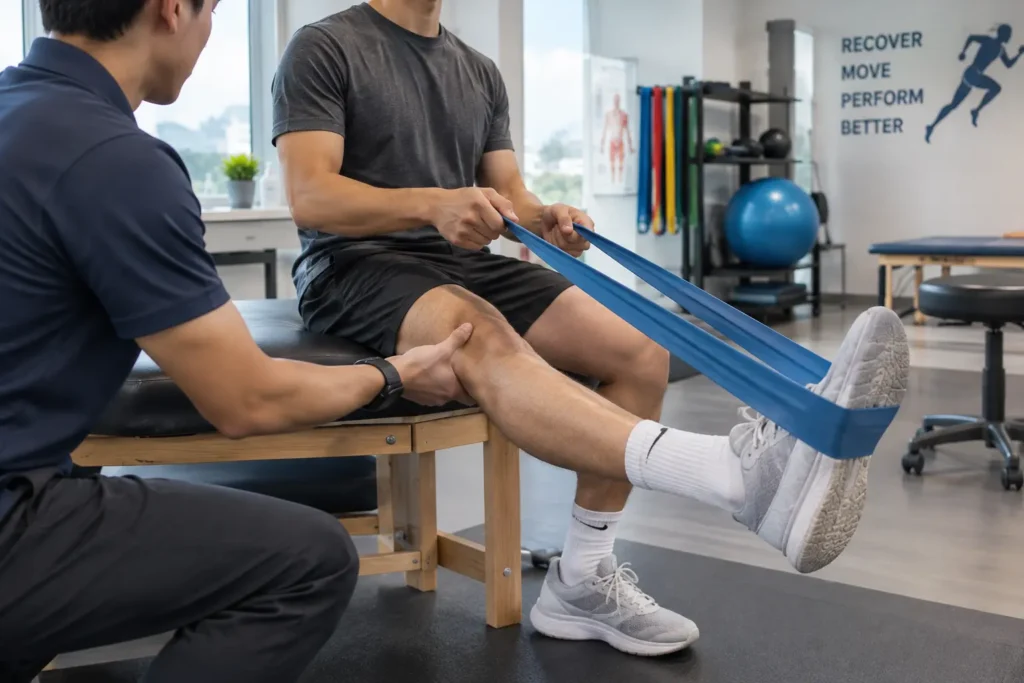
- Physical therapy
- Bracing when appropriate
- Injection therapies in selected cases
Minimally Invasive (Arthroscopic) Surgery
Arthroscopic surgery lets the surgeon diagnose and treat joint problems through small incisions using a camera and specialized instruments. It is commonly used for:
- ACL injuries
- Meniscus tears
- Cartilage injuries
- Shoulder ligament and tendon injuries
Because it is minimally invasive, many patients experience less pain, smaller scars, and a faster recovery compared with traditional open surgery.
When Is Surgery Considered?
Surgery may be recommended when:
- A joint remains unstable despite rehabilitation
- A tear is unlikely to heal on its own
- A torn piece is locking or catching the joint
- You want to return to sports that involve cutting, pivoting, or overhead movement
For advanced joint damage, Joint Replacement Surgery may be considered. Your doctor will explain the options and recommend surgery only when it is appropriate.
Recovery and Returning to Sport
Recovery depends on the injury and its severity. Minor sprains and overuse conditions may improve within several weeks. Surgical repairs such as ligament reconstruction often require several months of rehabilitation.
Recovery usually moves through stages:
- Protect the joint and settle pain and swelling
- Restore range of motion
- Rebuild strength and balance
- Return to sport-specific training
- Return to play when strength, stability, and confidence are back
Return to sport is decided by how well the joint works, not only by how many weeks have passed. Patients who follow their rehabilitation program consistently often achieve better long-term outcomes.
Helping Prevent Re-Injury
- Warm up before activity
- Build strength in the muscles around your knees, hips, and shoulders
- Increase training gradually
- Wear proper footwear
- Allow rest days, and do not play through pain
Sports Medicine Doctor or Orthopedic Surgeon?
The two overlap. Orthopedic surgeons treat a wide range of bone and joint conditions, with surgical and non-surgical options. Sports medicine doctors focus on injuries from activity. A doctor who has both, such as an orthopedic surgeon with sports medicine fellowship training, can evaluate the injury and guide you to the right treatment, whether that is rehabilitation or surgery.
Not sure how to compare doctors? Read [link to “How to Choose an Orthopedic Doctor in Cebu” once published].
When Should You See a Sports Medicine Doctor?
It is advisable to seek evaluation if you experience:
- Pain or Swelling That Lasts More Than 1 to 2 Weeks. Pain that does not improve with rest may indicate a condition that needs treatment.
- A Joint That Gives Way, Catches, or Locks. This can point to a ligament, meniscus, or labral injury.
- Pain That Returns Every Time You Play. A repeated pattern often means the underlying problem has not been addressed.
- Sudden Inability to Bear Weight or Move the Joint After an Injury. This should be evaluated promptly.
Early diagnosis often leads to more treatment options and better long-term outcomes.
Frequently Asked Questions
No. Sports medicine covers injuries from any exercise or physical activity, including weekend games, gym workouts, running, and active jobs.
Not necessarily. Many injuries improve with rest, physical therapy, and other non-surgical care. Surgery is typically considered when an injury causes ongoing instability, will not heal on its own, or does not respond to conservative treatment.
Playing through pain, swelling, or a feeling of instability can make an injury worse. If symptoms last more than a few days or the joint gives way, it is safer to get checked first.
Get urgent care for deformity, inability to bear weight, numbness, or severe pain after a fall. For swelling or pain that does not settle within a week or two, book an evaluation.
Bring any previous X-rays, MRI results, and reports, a list of your medications and allergies, your insurance or HMO card, and notes on how and when the injury happened.
Dr. Chu Santos' Advice
“Pain that comes back every time you play is your body asking for attention. Many sports injuries respond well to non-surgical care when they are caught early, and when surgery is needed, minimally invasive techniques help many patients return to the activities they enjoy. Get checked early instead of playing through pain.”
– Dr. Charles Andrew Chu Santos MD, FPOA
Need Help with a Sports Injury?
Related Orthopedic Services
You may also find our guide on When Should You See an Orthopedic Doctor for Knee Pain? helpful if you are experiencing ongoing knee discomfort or instability.
In This Article
- Introduction
- What Is a Sports Medicine Doctor?
- Common Sports Injuries a Sports Medicine Doctor Treats
- Signs You Should See a Sports Medicine Doctor
- How Sports Injuries Are Diagnosed
- Treatment Options for Sports Injuries
- Recovery and Returning to Sport
- Sports Medicine Doctor or Orthopedic Surgeon?
- When Should You See a Sports Medicine Doctor?
- Frequently Asked Questions
- Dr. Chu Santos’ Advice
Need Help with a Sports Injury?
Dr. Charles Andrew Chu Santos MD, FPOA
Need an appointment or have questions? Get in touch with Dr. Charles Andrew Chu Santos and visit the clinic during operating hours. Your orthopedic health is our priority.
Clinic Hours
Tuesday & Friday
9am – 4pm
Thursday & Saturday
9am – 1pm